


Dear Brothers and Sisters,
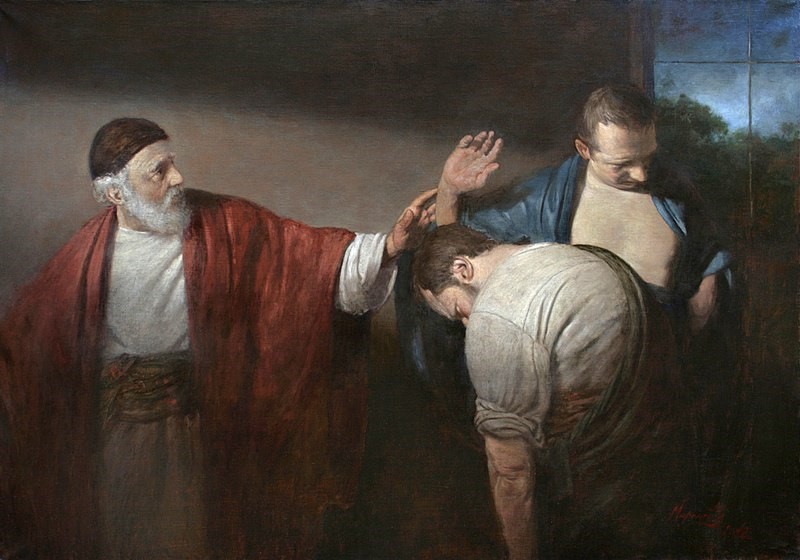
On the heels of the leaders questioning Jesus’ authority, Jesus launches into a parable about a man with two disobedient sons. The first son is asked by his father to go out into the vineyard (here representing Israel), to work. The son in an act of defiance tells his father, “No” an act of disrespect in a society that valued parental respect above all else. Listeners would have been horrified by this young man’s disrespect for his father. The young man eventually rethinks his response and goes as requested. The man then goes to his second son and asks him to work in the vineyard and this son says, “Yes”, but then never goes. Jesus then poses to the leaders, “Which of these two did his father’s will?” When the leaders respond rightly, they unknowingly condemn themselves. Jesus is quick to point out to them this fact that tax collectors and prostitutes are getting into heaven before these self-described paragons of Israel’s society. His pronouncement would have horrified and enraged these leaders. Tax collectors and prostitutes were not acceptable society and because they led lives connected to public sin, they were considered living outside the relationship of the covenant between God and Israel. Jesus, in telling these leaders that public sinners would be found more acceptable to God than they, was quite an insult. The key here is the acceptance of the gospel. For Jesus, tax collectors and prostitutes, accepting his message after rejecting the law was more acceptable to God than those who claimed to accept and live by the law, but rejected him and his gospel. Here he connects their condemnation with their rejection of John the Baptist as proof of their evil. Even when faced with the evidence of his righteousness and the fact that sinners were being converted by his preaching, they still rejected him.
In the world of ancient Mediterranean culture honor was everything. You owed everything you had to the community in which you lived and there was no greater relationship than the one you had with your family/clan/community. Most important amongst these relationships of respect was that of the honor you gave to your parents. Children owed their parents everything since without your parents you would never have come to be. The duty to parents meant that you respected and honored your parents and even as an adult you were compelled to do your parent’s will. Respect and honor had to be paid to one’s parents. When we look at the Decalogue (10 Commandments) we see that immediately after the respect and honor owed to God the next commandment has to do with honoring your parents.
Given the sense of duty and honor owed to your parents, in Jesus telling of the parable of the two sons the listeners would have been horrified by both sons’ responses to their father. Their lack of respect and filial piety would be a great shame and sign of public dishonor and any parent who was on the receiving end of such disrespect. It would be well within their rights to disown such children and in extreme cases even seek retribution.
Jesus as we know, is speaking to the sin of the leadership of Israel. His stinging retort at the end of the parable that those outside the covenant were more acceptable to God because of their willingness to repent did not garner him any new friends either. However, there is an overlooked element here that reminds me of another parable with equally egregious behavior- the parable of the Prodigal Son. Naturally, Jesus’ emphasis in the present text is on the behavior of the sons. But you might say there is an unspoken subtext here that is often unnoticed that is made more evident in the story of the prodigal. It is that of the father – the character representing God in both stories. Notice the patience of the father, though not fully explored it might be said to be akin to the patience and love the father in the story of the prodigal. In that parable the sons are equally insulting to their father. In both cases, God, represented by the father in both stories bears their insults and insolence with patience. While the sins of the sons are obvious – so obvious that even the leaders who hear the story can point it out, this father never seeks retribution. It is their behavior that will put them out of the Kingdom and disinherit them, not the action of the father, who is willing even to take the sinner back, if there is repentance on their part.
The scriptures overflow with images of God’s mercy. But it cannot only be a one-way relationship. While God’s mercy can heal and bring new life, we must be willing to repent and welcome that mercy; otherwise, we are no better than the leaders of Israel in today’s text. I invite you today to reflect on your own hardness of heart and the times that you have rejected God’s plan or disrespected God by choosing your own way rather than giving God the honor.
Peace,
Fr. Steve